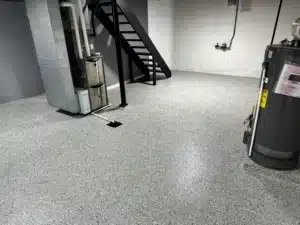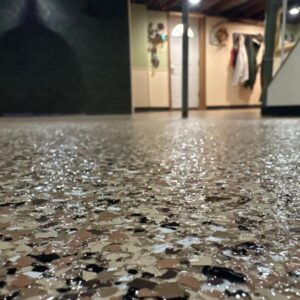
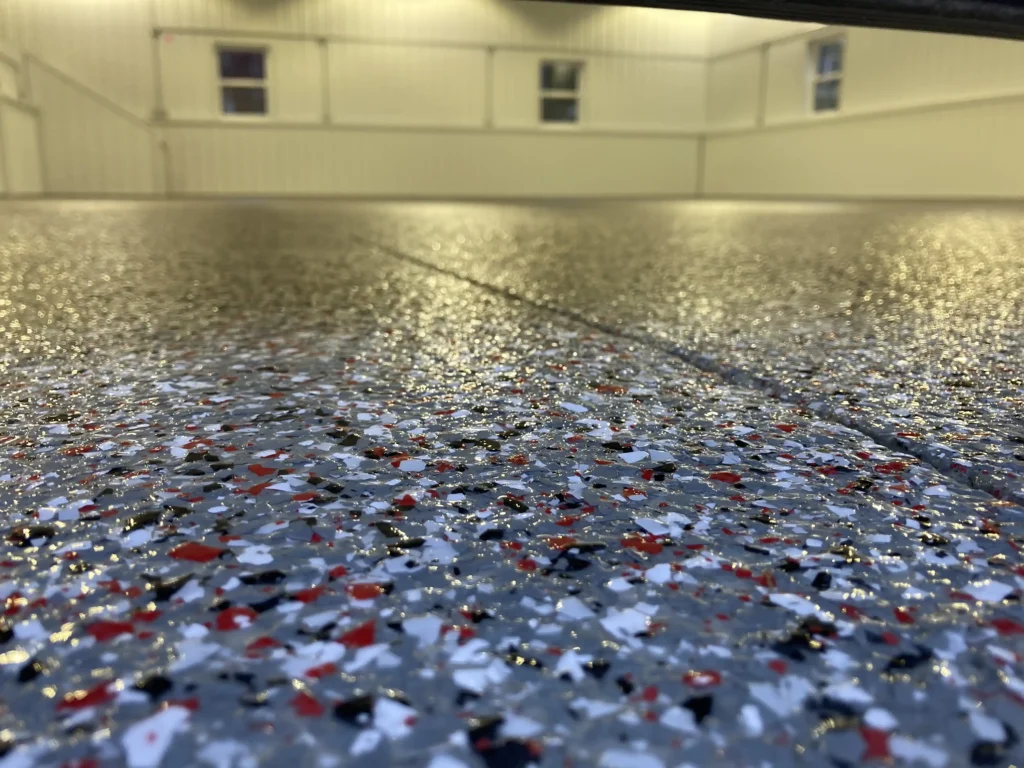
Good news: keeping a polyurea or polyaspartic garage floor looking new is genuinely easy. Because the surface is seamless and non-porous, dirt and spills sit on top instead of soaking in, so the whole routine comes down to a few simple habits. Sweep or dust-mop once a week to clear away grit, wipe up spills when they happen, and damp-mop with warm water and a little mild cleaner when the floor needs more. In winter, rinse off road salt so it does not build up. Avoid harsh chemicals, abrasive tools, and dragging heavy equipment across it. Do that, and your floor stays looking sharp for years. Here is the full routine.
Why these floors are so easy to maintain
A polyurea and polyaspartic coating is seamless and non-porous, which is the whole reason maintenance is so simple. There are no grout lines or open pores for dirt, oil, or moisture to work into, so nothing really stains or sinks in. Spills bead on the surface, dust sweeps right off, and the hard, UV-stable finish shrugs off chemicals and sunlight. The one thing worth knowing is that while dirt does not stick, loose grit and sand can act like fine sandpaper underfoot and under tires, so the main job of regular cleaning is simply keeping that grit from grinding against the surface.
The everyday routine
Day-to-day care takes almost no effort. Two habits cover it:
- Sweep or dust-mop weekly. Use a soft-bristle broom or a microfiber dust mop to clear sand, grit, and debris, especially near the garage door and workbench where it collects. This is the single most important thing you can do, since it keeps grit from scratching the finish.
- Wipe spills promptly. The coating resists staining, but cleaning up oil, gas, brake fluid, or antifreeze when you spot it keeps the gloss even. A paper towel or soft cloth handles most spills, with a little mild detergent for anything greasy.
The occasional deep mop
When sweeping is not enough, give the floor a damp mop. Sweep first so you are not dragging grit around, then mop with warm water and a small amount of mild, pH-neutral cleaner. A microfiber mop works best. The one thing to watch is residue: rinse with clean water afterward so no soapy film is left behind, since a film can dull the shine and get slippery when wet. For most garages, a deep mop every month or so, plus the weekly sweep, keeps the floor looking its best. There is no need to wax or polish, these floors shine on their own.
Winter and road-salt care
This is the one that matters most in Western PA. All winter, your tires track in road salt, slush, and snowmelt, and while a coated floor keeps the salt from damaging the concrete underneath, letting it sit still leaves a chalky film that dulls the finish. The fix is simple: rinse or mop off the salt regularly rather than letting it accumulate. A few winter habits help:
- Rinse or damp-mop salt residue as it builds up, using warm water to dissolve it more easily.
- Keep a mat at the garage entry to catch some of the salt and moisture before it spreads, and shake it out regularly rather than leaving it in one fixed spot indefinitely.
- Use a plastic shovel, not a metal one, if you are clearing snow near the floor, to avoid scratching the surface.
Once the weather warms up, a thorough rinse with a hose clears out the last of the winter’s salt.
The whole routine in one line: sweep the grit, wipe the spills, rinse the salt, and skip the harsh stuff. That is all a polyurea floor really asks.
What to avoid
A durable floor still has a few things it does not like. Steer clear of these to keep the finish looking new:
- Harsh chemicals. Vinegar, bleach, ammonia, citrus cleaners, undiluted degreasers, and solvents can dull or attack the topcoat. Stick with mild, pH-neutral cleaners.
- Abrasive tools. Metal or stiff wire brushes, steel wool, and metal scrapers can scratch the surface. Use soft brushes, microfiber, or a non-abrasive pad instead.
- Too much soap. Heavy soap leaves a slippery film that attracts dirt, so use a little and rinse well.
- Waxing or polishing. It is unnecessary and can actually cloud the natural gloss.
If you ever need to lift paint or adhesive from a project, scrape gently with a plastic tool rather than metal, and spot-test any stronger product in an out-of-the-way corner first.
Protecting the finish from scratches and dents
Most wear on a coated floor comes from impact and dragging, not from cleaning. A little care goes a long way. Do not drag or slide heavy items like tool chests or shelving across the floor, lift them or use furniture sliders or a sheet of cardboard as a barrier. Place pads or small mats under concentrated weight and sharp points, such as jack stands, motorcycle kickstands, and workbench legs. And if you use the garage as a workshop, a mat in the main work area adds a layer of protection against dropped tools. These small steps keep the surface smooth and mark-free for the long haul.
Frequently asked questions
How do you clean a polyurea garage floor?
Sweep or dust-mop weekly to remove grit, wipe up spills promptly, and damp-mop with warm water and a little mild, pH-neutral cleaner when needed, rinsing well so no film is left behind.
What should you not use on a polyurea or polyaspartic floor?
Avoid harsh chemicals like vinegar, bleach, ammonia, and solvents, along with abrasive tools like metal brushes and steel wool. They can dull or scratch the finish.
How do I handle road salt on my garage floor in winter?
Rinse or damp-mop the salt off regularly so it does not build up and dull the finish. A mat at the entry and warm water for mopping both help.
Do I need to wax or reseal a polyurea floor?
No waxing is needed, since the floor shines on its own. A quality professionally installed coating is built to last for years with just basic cleaning.
Love your floor, and we will help you keep it that way
A polyurea floor is built to look great with very little effort, and it starts with a quality installation. As a family-owned local team serving Greater Pittsburgh, Western Pennsylvania, Eastern Ohio, West Virginia, and nearby areas, we install durable, low-maintenance garage floor coatings backed by a 15-year warranty. Thinking about coating your floor, or have questions about caring for one? Call 724-456-2788 or request a quote.