Quick Answer: It depends entirely on the coating. Concrete freeze thaw damage happens when trapped water expands inside the slab, and flexible polyurea and polyaspartic systems are built to prevent it, since they stay non-porous and flex with the slab as temperatures swing. Rigid coatings like standard epoxy struggle instead, cracking and peeling as the slab moves beneath them, and bare, uncoated concrete suffers the worst damage of all.
Concrete Freeze Thaw Damage: What to Expect
Winter is the toughest test any concrete surface will face all year. Temperatures swing above and below freezing, snow melts and refreezes, and road salt gets tracked in on every tire and boot. Not every coating handles that stress the same way, and the difference between a floor that still looks great in ten years and one that cracks apart in a few seasons usually comes down to a single choice: which type of coating went down in the first place.
As a family-owned team that has spent years protecting garages, driveways, and patios across Western Pennsylvania, Eastern Ohio, and West Virginia, we’ve seen exactly what happens when concrete goes into winter unprotected, and what happens when it’s coated the right way. Here’s what’s actually going on under the surface.
What Freeze-Thaw Damage Does to Bare Concrete
Concrete is porous, so it soaks up water the same way a sponge does. When the temperature drops, that trapped water freezes and expands by roughly nine percent. That expansion creates real pressure inside the slab, and with nowhere to go, it pushes the concrete apart from the inside out. Researchers who study concrete at the microscopic level have documented how this repeated pressure develops internal stress that leads directly to cracking, since ice occupies more space than the water it came from (University of Illinois Concrete Microscopy Library).
Do that over and over through a full winter and concrete freeze thaw damage compounds: hairline cracks grow longer and deeper, the surface pits, and spalling sets in, where the top layer flakes, crumbles, or pops away in sheets. Many driveways and patios were also poured without the tiny air pockets that help concrete handle freezing, which leaves them even more exposed. Every cycle makes the slab a little worse than the one before it.
Rigid vs. Flexible Coatings: Why the Difference Matters
Not all coatings react to the cold the same way, and this is really the whole story when it comes to freeze-thaw performance.
Rigid coatings crack. Standard epoxy is hard and brittle, with very little give. When the slab expands and contracts through a temperature swing, epoxy can’t stretch to keep up, so it cracks and starts losing its grip on the concrete after repeated cycles. Flexible coatings move with the slab instead. Polyurea and polyaspartic systems are elastomeric, meaning they stretch and flex right along with the concrete, staying bonded and intact through the same swings that break epoxy apart. We cover this comparison in more detail in our polyurea vs. epoxy breakdown, but the short version is that a flexible system is the right call in any climate with a real winter. It’s built to move, not to fight the concrete underneath it.
How Coatings Stop Concrete Freeze Thaw Damage
A quality coating defends the slab on two fronts at once, and both matter equally for preventing concrete freeze thaw damage. First, it seals the surface. A non-porous coating keeps water and melted snow from soaking into the concrete in the first place, so there’s no trapped moisture inside to freeze and expand. No water in the pores means no freeze-thaw pressure building up underneath.
Second, it flexes. Even as surface temperatures rise and fall throughout the day, a flexible coating moves with the slab instead of cracking, and it keeps that protective seal unbroken the entire time. Together, those two properties stop the cycle that destroys bare concrete before it even has a chance to start. Keep the water out and stay flexible, and freeze-thaw loses its power. That’s exactly what a properly installed polyurea or polyaspartic system is designed to do.
The Salt Factor: How De-Icing Chemicals Compound the Damage
Road salt makes winter even harder on concrete. De-icing salt lowers the freezing point of water, which lets moisture soak deeper into a bare slab before it refreezes, and it leaves behind that chalky white residue as it recrystallizes on the surface. Salt is also corrosive to concrete over time, a problem well documented by researchers who study how deicing chemicals degrade concrete, asphalt, and stone surfaces (University of Minnesota Extension).
Because a coated floor is sealed and non-porous, the salt and meltwater that tires drag in just sit on top of the surface and wipe away, instead of working down into the concrete and feeding the freeze-thaw damage underneath. In a region that salts its roads all winter long, that protection matters just as much as flexibility does.
Repairing Concrete Before Coating It
A coating is a powerful shield, but it’s not a structural repair. It works best on concrete that’s already in sound condition, or on damage that gets properly repaired before coating begins. If a slab already has deep, actively growing cracks, heavy spalling, or signs it’s settling or shifting, those problems get addressed first.
Coating straight over deteriorating concrete only hides the trouble instead of fixing it, which is why our process always includes filling and repairing cracked concrete and thoroughly prepping the surface before anything gets coated. Done right, the finished floor both looks great and actually protects what’s underneath it for years to come.
Indoor vs. Outdoor Concrete: Same Principles, Different Exposure
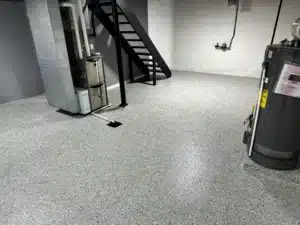
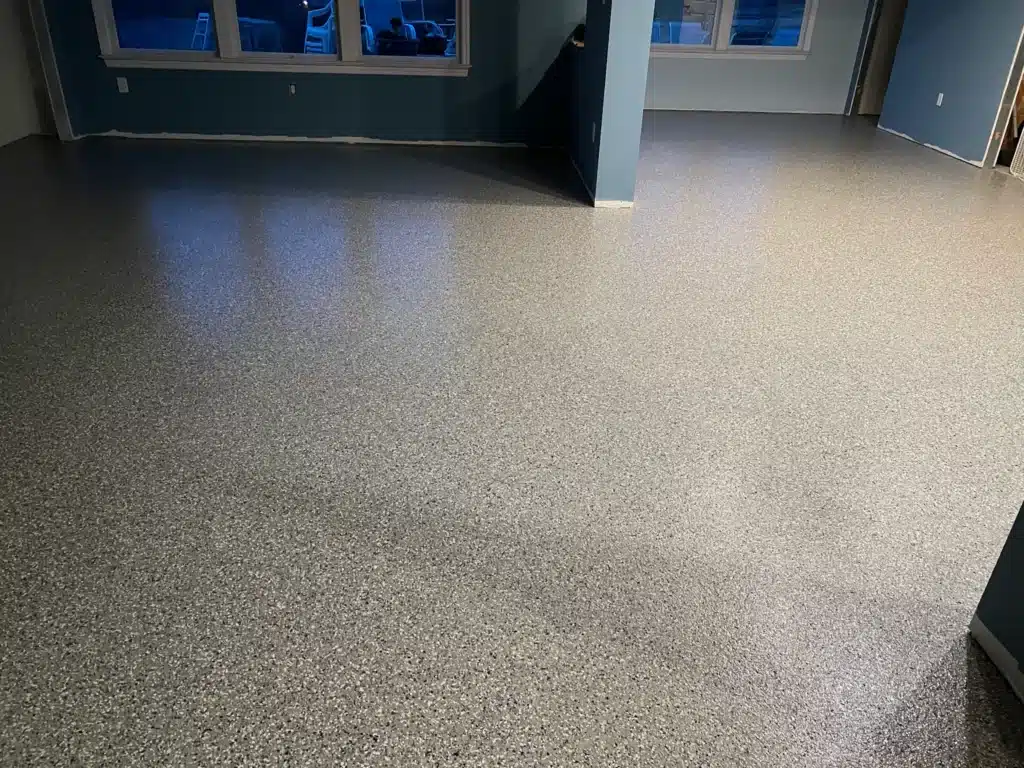
Outdoor concrete takes the most direct hit from freeze-thaw. Driveways, patios, sidewalks, and porches are fully exposed to rain, snow, and the full swing of the thermometer, so a sealed, flexible outdoor concrete coating makes a real difference out there. Indoors, garage floors face their own version of the same problem, mostly from the salt and meltwater tracked in on tires and boots, plus the cold that pours in every time the garage door opens. A properly installed garage floor coating handles that exposure the same way an outdoor system does: by sealing water out and flexing with the slab. Whether the concrete is inside or out, the same two principles keep it protected all winter long.
Frequently Asked Questions
Will a concrete coating crack in freeze-thaw climates?
A flexible polyurea or polyaspartic coating is built to expand and contract with the slab, so it resists cracking. Rigid epoxy is the type that’s prone to cracking and peeling in the cold.
Does a coating stop concrete freeze thaw damage?
It protects against concrete freeze thaw damage by sealing water out of the concrete so nothing freezes inside, and by flexing with the slab through temperature swings. It’s not a structural repair, so any existing serious damage gets fixed first.
Is polyurea better than epoxy for cold climates?
Yes. Polyurea and polyaspartic coatings are far more flexible than epoxy, which lets them handle repeated freeze-thaw cycles without cracking or losing adhesion to the slab.
Does road salt hurt a coated concrete floor?
No. The sealed, non-porous surface keeps salt and meltwater sitting on top, where they wipe away easily, instead of soaking into the concrete and causing freeze-thaw damage.
How many freeze-thaw cycles can a coated slab handle?
A properly installed flexible coating is designed to handle repeated freeze-thaw cycles for the life of the system, since it flexes with the slab instead of accumulating stress the way rigid coatings and bare concrete do.
Prevent Concrete Freeze Thaw Damage Before Winter Hits
Freeze-thaw is the toughest test concrete faces all year, and a flexible, non-porous coating is one of the best answers to it. As a family-owned local team serving Greater Pittsburgh, Western Pennsylvania, Eastern Ohio, West Virginia, and nearby areas, we prep and repair the slab properly, then seal it with a system built to move with the seasons. Call 724-456-2788 or request a free quote to protect a garage floor or outdoor concrete space before the cold sets in.