A peeling garage floor is almost never bad luck. It is a bond failure, meaning the coating lost its grip on the concrete. Trace any peeling floor back far enough and you land on one of a few culprits: the slab was never properly ground before coating, moisture pushed up through the concrete and lifted the coating, the surface was contaminated with oil or sealer the coating could not stick to, hot tires pulled it up, or the wrong product was used in the wrong conditions. The good news is that every one of these is predictable and preventable. Here is why floors peel and exactly how to keep it from happening next time.
Peeling is a bond failure, not bad luck
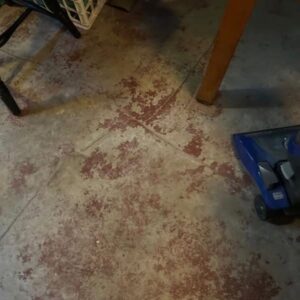
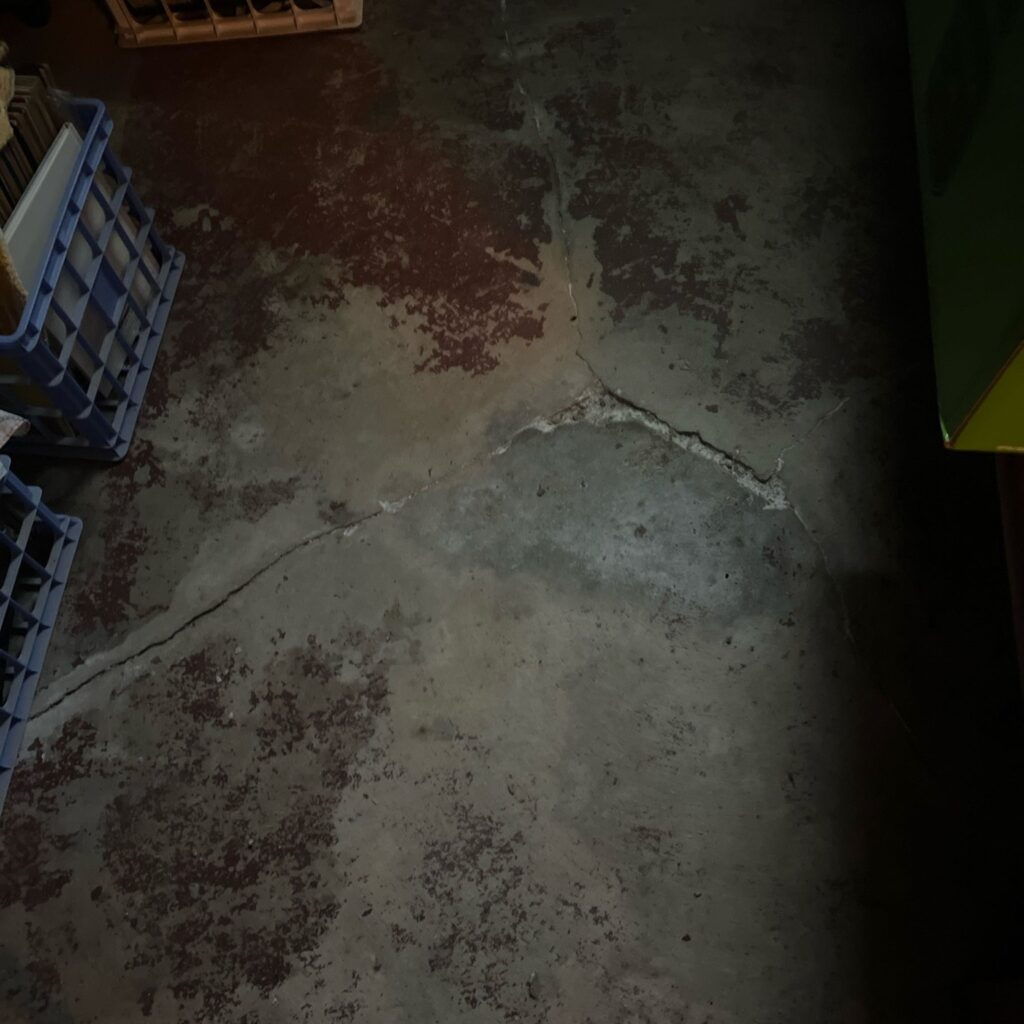
Everything about a coating’s performance comes down to one thing: how well it is bonded to the slab. A real floor coating does not just sit on the surface like paint, it has to lock mechanically into the concrete. When a floor peels, flakes, bubbles, or lifts in sheets, that bond gave way somewhere. If you have ever pulled up a piece and found smooth, clean concrete on the back of it, that is the tell: the coating never truly grabbed the slab in the first place. Once you see peeling as a bond problem, the causes all make sense.
Cause 1: the slab was never properly ground
This is the number-one reason coatings fail. Concrete has to be mechanically profiled, with a diamond grinder, so the coating has texture to lock into. A floor that was only acid-etched, pressure-washed, or simply swept and rolled gives the coating almost nothing to hold. Pressure washing does nothing for adhesion, and acid etching is an inconsistent shortcut. When you see a coating peel away in clean sheets, that is the fingerprint of a slab that was never ground. Proper grinding is not optional, it is the foundation of a floor that lasts.
Cause 2: moisture under the coating
Concrete is porous, and it can draw water vapor up from the soil beneath the slab. If that vapor hits the underside of a coating with nowhere to go, the pressure builds and pushes the coating off the floor. This shows up as blisters, bubbles, and delamination that often start in the middle of the floor rather than the edges. Slabs poured without a vapor barrier are especially prone to it. Preventing this means testing the slab for moisture before coating, not discovering the problem after the floor bubbles.
Cause 3: contamination the coating cannot stick to
A floor can look clean and still be covered in things a coating will not bond to. Motor oil, grease, brake cleaner, old sealer, wax, and dust all leave a film, sometimes invisible, between the coating and the concrete. When that happens, the coating bonds to the contaminant instead of the slab, and the contaminant lets go. This is why thorough cleaning, degreasing, and grinding matter so much, and why a quick rinse is not enough. The coating has to reach clean, open concrete.
Cause 4: hot-tire pickup
This one shows up as peeling in tire-shaped patches right where you park. When you drive, your tires heat up, and when you park on a coating that cannot handle it, the hot rubber grips the surface. As the tire cools it contracts and pulls the coating up with it. Standard epoxy is especially vulnerable because it softens and gets brittle. A harder, more flexible polyaspartic surface resists hot-tire pickup, which is why the product choice matters as much as the prep.
Cause 5: the wrong product or the wrong conditions
Not every coating belongs on a garage floor, and not every day is a good day to install one. Thin, paint-like epoxy kits are not built for the demands of a garage. And any coating applied outside its temperature, humidity, or dew-point window will cure poorly and bond weakly. Coating a cold slab, or one that is damp with condensation, traps moisture at the bond line and sets the floor up to fail. The fix is using a product made for garage use and installing it in the right conditions with enough time to fully cure.
The common thread: every cause of peeling is really a prep or product problem. Grind the slab, keep moisture and contamination out of the bond, pick the right coating, and peeling simply does not happen.
How to prevent peeling next time
Putting it all together, a floor that lasts comes down to a short, non-negotiable checklist:
- Grind the concrete. Mechanical diamond grinding, not acid etching or a pressure wash, so the coating can lock in.
- Test and manage moisture. Check the slab before coating so vapor does not push the floor off later.
- Remove every contaminant. Degrease, clean, and grind away oil, sealer, and film so the coating reaches bare concrete.
- Repair the slab first. Fill cracks and pits so the coating goes over sound concrete.
- Use the right system. A flexible, hot-tire-resistant polyurea and polyaspartic system, not a thin epoxy kit.
- Install in the right conditions. Within the proper temperature and humidity range, with full cure time before use.
Do those things and the bond holds. Skip any of them and you are rolling the dice.
Already peeling? Here is what to do
If your floor is already peeling, the worst move is to coat right over it. A new layer applied over a failing coating is only as good as the old bond underneath, which already told you what it thinks of the slab. The right approach is to grind the old coating off, evaluate the concrete, address whatever caused the original failure, whether that was prep, moisture, or contamination, and then install a proper system. We cover this in more detail in our guide to whether you can put polyurea over old epoxy. Fixing the cause is what turns a repeat problem into a permanent floor.
Frequently asked questions
Why is my garage floor coating peeling?
Almost always a bond failure. The most common causes are a slab that was never diamond ground, moisture pushing up through the concrete, contamination like oil or sealer, or hot-tire pickup.
Can I just recoat over a peeling floor?
No. A new coat over a failing one will peel too. The old coating needs to be ground off, the slab evaluated, and the original cause fixed before recoating.
Does moisture really cause peeling?
Yes. Water vapor rising through the slab builds pressure under the coating and lifts it, showing up as bubbles, blisters, or peeling. Moisture testing before coating prevents it.
How do I keep a new coating from peeling?
Proper prep and the right product. Diamond grind the slab, remove contaminants, test for moisture, repair cracks, and use a flexible polyurea and polyaspartic system installed in the right conditions.
Get a garage floor that stays put
Peeling is preventable, and it starts with doing the prep right. As a family-owned local team serving Greater Pittsburgh, Western Pennsylvania, Eastern Ohio, West Virginia, and nearby areas, we diamond grind, repair, and properly prep every slab before installing a flexible, hot-tire-resistant garage floor coating built to last. Call 724-456-2788 or request a quote for a floor that bonds and stays bonded.