What a Musty Basement Smell in Morgantown Was Telling Us
Picture a Morgantown basement that always felt damp: a musty smell that got stronger after rain, a bare slab that seemed to sweat, chalky white residue creeping across the concrete, and a space nobody wanted to use for storage, let alone living. The concrete itself was sound, but it was porous, wicking moisture up from the soil and releasing it into the room.
None of the signs pointed to a flood or a leak. There was that classic basement smell, especially noticeable after a wet stretch, air that felt heavy and humid, and efflorescence, the white powdery residue left behind when moisture moves through concrete and evaporates. Items stored on the floor felt damp within weeks. It was a slab quietly breathing moisture into the room, day after day.
Why Basements Get Damp in the First Place
Concrete looks solid, but it behaves like a sponge. It’s naturally porous, so it pulls water vapor up from the soil packed around a foundation through a process called moisture vapor transmission. That vapor rises through the slab and evaporates into the basement air, driving up humidity. High humidity is what feeds a musty odor and creates the damp conditions mold and mildew need to take hold, a mechanism the University of Minnesota Extension outlines in its breakdown of basement moisture sources. Morgantown’s humid summers and freeze-thaw winters only add to the load a below-grade slab has to manage.
This is also why a musty basement smell can show up even when there’s no visible leak or standing water anywhere in sight. Homeowners often assume a dry-looking floor means a dry basement, but a slab can be releasing moisture vapor at a steady rate without ever looking wet to the eye. The concrete itself absorbs some of that moisture, so by the time efflorescence or a musty odor becomes noticeable, the process has usually been going on for a while. Bare, uncoated concrete has no way to slow that vapor down, which is exactly why sealing the surface makes such a measurable difference.
How Polyurea Coating Stops a Musty Basement Smell
A non-porous polyurea basement floor coating tackles a musty basement smell at the surface. Once the slab is sealed, it can no longer soak up and release moisture into the room, which sharply reduces the vapor coming through and the humidity it creates. The coating is inorganic, so unlike carpet or wood subfloors it gives mold nothing to feed on, an important distinction the EPA points to when it recommends keeping surfaces dry and controlling indoor humidity to limit mold growth. The result is a floor that feels dry, a room that smells clean, and a surface that wipes down in seconds.
One honest caveat matters here. A floor coating seals a sound slab against surface moisture and vapor. It’s not a substitute for foundation waterproofing. If a basement has active water coming in through walls or cracks, that source has to be diagnosed and handled first, which is also why we walk through crack and foundation concerns before any coating goes down. The slab is moisture-tested first, because coating over a floor with too much vapor pressure can cause it to blister later. Getting that assessment right up front is what makes the finished floor last.
The Process, Step by Step
A dry, durable basement floor comes from doing the prep correctly:
Moisture assessment. The slab is checked so the right approach and materials are matched to the actual conditions before anything is applied.
Diamond grinding. The concrete is mechanically ground to open its pores and create the profile the coating needs to bond tightly.
Crack and surface repair. Cracks, pits, and imperfections are filled and leveled so the finished floor is smooth and seamless.
Base coat. A pigmented polyurea base is applied, sealing the prepared concrete.
Decorative flake. Color flake is broadcast into the base for a clean look and added slip resistance, a real plus on a basement floor.
Polyaspartic topcoat. A clear topcoat locks everything in, delivering the non-porous, easy-clean surface that keeps the dampness out.
The bottom line for a damp basement: seal a sound slab the right way and a musty, humid room becomes a dry, clean space that actually gets used.
The Results
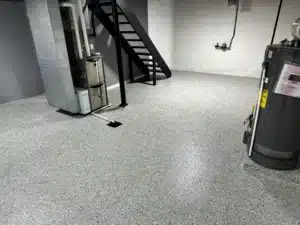
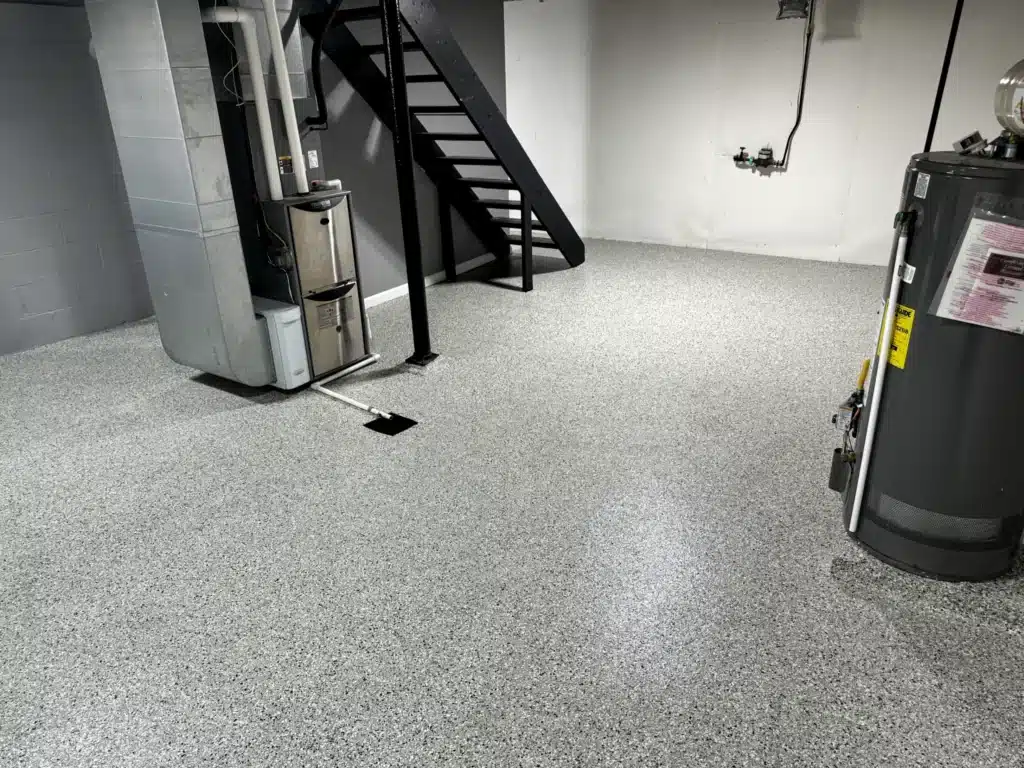
Sealing the floor changed how the whole basement felt. The damp, heavy air gave way to a room that stayed dry to the touch, and the musty smell that used to greet visitors at the bottom of the stairs was gone. The efflorescence had nothing left to feed it. The finished surface cleaned up with a quick sweep or mop, resisted stains, and gave the space a bright, finished look instead of dull gray concrete.
Just as important, the fix held up. Because the slab was moisture-tested and properly prepped before coating, there was no blistering or peeling once the seasons changed and Morgantown’s humidity climbed again in the following summer. That’s the detail that separates a lasting repair from a temporary cover-up: the coating didn’t just mask the musty basement smell for a few weeks, it addressed the moisture vapor causing it in the first place. A basement the family used to avoid became genuine square footage again, ready for storage, a home gym, or a hangout. The polyaspartic system that made it possible is backed by a 15-year warranty.
Why Morgantown Homeowners Trust a Local Coating Team
Basements are the trickiest floors in the house, and they reward a team that respects the moisture side of the job. As a family-owned company already serving Morgantown, Star City, Cheat Lake, and the wider Monongalia County area, we handle the assessment, grinding, crack repair, and coating in-house, and we explain honestly what a coating can and cannot do for a space. Learn more about our approach on our about us page. The goal is a basement floor that stays dry and looks great for years, not a quick coat that blisters by spring.
Frequently Asked Questions
Can a floor coating fix a musty basement smell?
A non-porous coating seals the slab and sharply reduces the surface moisture and vapor that cause a musty basement smell. It works well on a sound slab, but active water intrusion has to be addressed separately first.
Will polyurea coating stop that musty basement smell for good?
In most damp basements, yes. Sealing the porous concrete cuts the humidity and moisture that feed the odor, and the inorganic surface doesn’t support mold.
Do you test for moisture before coating a basement floor?
Yes. The slab is assessed first, because coating over a floor with too much vapor pressure can cause blistering later. Testing up front is what makes the floor last.
Is a coated basement floor slippery?
No. Decorative flake and a textured topcoat add traction, keeping the surface slip resistant even in a damp environment.
How long does a polyurea basement floor coating last?
A properly installed system is backed by a 15-year warranty and typically holds up for many years beyond that with basic sweeping and mopping.
Fix a Musty Basement Smell Before It Spreads
If a basement feels damp, smells musty, or shows that chalky white residue, we can assess it and explain exactly what will fix it. As a family-owned team serving Morgantown, the surrounding Monongalia County area, and nearby areas, we install non-porous basement floor coatings that seal out surface moisture and last for years. Call 724-456-2788 or request a quote to get started.