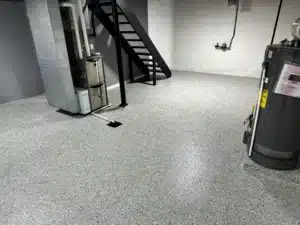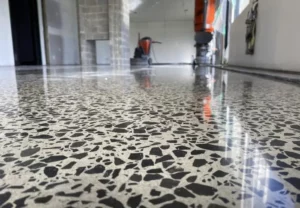
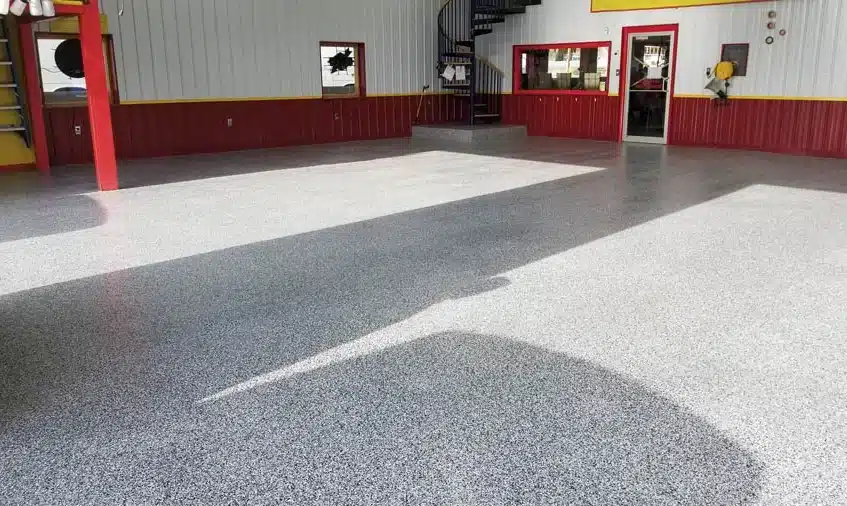
This is a representative project that shows how we approach an auto shop floor rebuild in Butler. The details reflect the typical condition, process, and results of this kind of job rather than one specific customer.
Picture a busy auto shop in Butler with a floor that had taken twenty years of abuse: concrete darkened with soaked-in oil, cracked and pitted around the bays, dusting under constant tire and cart traffic, and slick wherever fluids collected. The owner needed a floor that could shrug off chemicals, stand up to lifts and dropped tools, stay safe underfoot, and get back in service fast so the shop kept running. The answer was a full rebuild with a polyurea and polyaspartic system. The old surface was ground down, cracks were repaired, and the slab was sealed with a seamless, chemical-resistant, slip-resistant floor, installed bay by bay so the shop never had to close its doors.
The challenge
An auto shop floor lives one of the hardest lives of any concrete surface. In a shop like this one, the problems had stacked up over the years: oil, grease, brake fluid, and antifreeze soaked deep into bare concrete, leaving stains that no amount of scrubbing would lift. Constant traffic from vehicles, floor jacks, and rolling tool carts had worn the surface until it dusted. Cracks and pits had opened up around the lifts and bay entrances, catching wheels and collecting grime. And the whole floor turned slick anywhere fluids pooled, a real safety issue in a space where people work under raised cars. On top of it all, the shop could not afford to shut down for days waiting on a floor to cure.
Why a polyurea and polyaspartic system was the right call
An auto shop needs a floor that wins on chemicals, toughness, safety, and speed at the same time. This system delivers on all four.
- Chemical resistance. The non-porous surface resists the oil, gas, grease, brake fluid, and antifreeze that ruin bare concrete. Spills sit on top and wipe away instead of soaking in and staining.
- Strength and impact resistance. Four times stronger than epoxy, the coating handles heavy traffic and weight from lifts and equipment, and it stands up to the dropped tools and hardware that are part of shop life.
- Safety. A slip-resistant aggregate is built into the surface, so the floor keeps its grip even where oil and water collect. A brighter, reflective finish also improves visibility in the work bays.
- Speed. Polyaspartic cures fast, so each section returns to service quickly, which is what makes a bay-by-bay install possible without closing the shop.
The rebuild process, step by step
Rebuilding a shop floor this worn takes methodical prep, done in a clear sequence:
- Diamond grinding. The old, oil-soaked surface is mechanically ground down to sound concrete, opening the slab so the new coating can bond permanently.
- Crack and pit repair. Cracks, pits, and worn joints around the bays and lifts are filled and leveled, erasing the trip hazards and wheel-catchers.
- Base coat. A pigmented polyurea base is applied, sealing the prepared concrete.
- Broadcast layer. Decorative flake goes down along with a slip-resistant aggregate, adding traction and a clean, professional look that hides everyday grime.
- Polyaspartic topcoat. A clear topcoat locks it all in, delivering the chemical resistance, abrasion resistance, and easy-clean surface the shop needs.
The bottom line for an auto shop: grind out the damage, seal the slab with a chemical- and impact-resistant system, and stage the work bay by bay so the shop keeps earning.
The results
The rebuilt floor changed how the whole shop worked. Oil and chemical spills now bead on the surface and wipe up in seconds instead of staining, and daily cleanup is a quick sweep and mop. The seamless surface stands up to lifts, jacks, carts, and dropped tools without dusting or cracking. The slip-resistant finish makes the bays safer in exactly the spots where fluids collect, and the brighter floor makes the space easier to work in and more impressive to customers who see it. Because the job was staged bay by bay, the shop stayed open the whole time. That durability is backed by a 15-year warranty on the polyaspartic system.
Why Butler Auto Shops Choose a Local Coating Team
Butler has deep manufacturing and workshop roots, and shop floors here have to earn their keep through grease, road salt, hot tires, and hard use. As a family-owned company already serving Butler and the surrounding area, we handle the grinding, crack repair, and coating in-house, and we plan the work around your bays and your schedule instead of ours. The goal is a shop floor that performs for years and gets there without costing you a week of business.
Frequently asked questions
Will the coating stand up to oil and automotive chemicals?
Yes. The non-porous polyurea and polyaspartic surface resists oil, grease, gas, brake fluid, and antifreeze, so spills wipe up instead of soaking in and staining.
Can you coat a floor that is already oil-stained and cracked?
Yes. The slab is diamond ground to remove the old, contaminated surface, then cracks and pits are repaired before coating, which is the heart of a proper rebuild.
Does the shop have to close during the job?
Usually not. Because the system cures fast, the work can be staged bay by bay so the shop keeps running while the floor is rebuilt in sections.
Is the floor safe when it gets oily or wet?
Yes. A slip-resistant aggregate is built into the finish, so the surface keeps its grip in the areas where oil and water tend to collect.
Rebuild your Butler auto shop floor without closing up
If your shop floor is stained, cracked, or dusting, we can walk it with you and build a plan that keeps your bays working. As a family-owned team serving Butler, Greater Pittsburgh, Western Pennsylvania, and nearby areas, we install chemical-resistant, slip-resistant commercial floor coatings built for automotive work. Call 724-456-2788 or request a quote to get started.