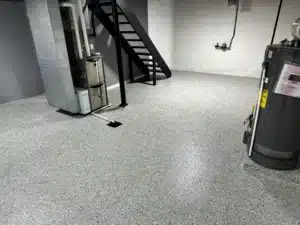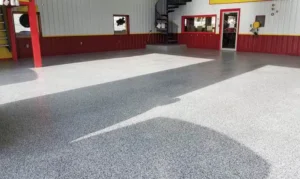
Neither option is wrong, but the climate makes the call. Stamped concrete is poured, patterned, and sealed as a single decorative slab, and at install day it looks like flagstone, brick, or wood. A polyaspartic coating is a flexible polyurea base and UV-stable top coat applied over an existing concrete slab, finished in one day with a flake broadcast for color and slip resistance. In Western PA, where freeze-thaw runs from November through March and patios cycle through dozens of expansion events every winter, the flexibility of a coating system is the bigger long-term advantage. Stamped concrete cracks where the slab cracks, fades under UV, and needs resealing every 2 to 3 years. A polyaspartic patio coating flexes with the slab, will not fade, and goes 15 to 20+ years before anything needs to be done to it. If your patio already exists and is structurally sound, a coating also comes in well below the cost of tearing it out and pouring stamped.
Here is the side-by-side at a glance:
| Factor | Stamped Concrete | Polyaspartic Coating |
|---|---|---|
| Installation time | 5–7 days | 1 day |
| Lifespan in Western PA | 25–30 years (with frequent care) | 15–20+ years |
| Cracks with freeze-thaw | Rigid, prone to cracking | Flexes with the slab |
| UV fading | Yes, color fades over time | UV-stable, no yellowing |
| Resealing required | Every 2–3 years | None |
| Slip resistance when wet | Lower (sealed surface can be slick) | High (with flake broadcast) |
| Cost per sq. ft. installed | $17–$25 (new pour) | $6–$12 (over existing slab) |
| Existing slab needed? | No (poured fresh) | Yes (or can be applied over stamped concrete) |
| Repair difficulty | Difficult to color-match patches | Easy touch-up or recoat |
| Aesthetic | Natural stone, brick, or slate appearance | Modern flake or solid-color finish |
The rest of this guide unpacks why those numbers matter in a Western PA backyard.
What Stamped Concrete Actually Is
Stamped concrete is a single decorative slab. A contractor pours fresh concrete, mixes in an integral color, broadcasts a color hardener on the surface, applies a release agent, and presses large rubber stamping mats into the still-wet surface to create the pattern. After it cures, a sealer is applied to protect the color and pattern.
What you end up with is a one-piece slab that looks like flagstone, slate, brick, cobblestone, or wood plank. It is genuinely impressive at install day. A well-done stamped concrete patio at normal viewing distance is hard to tell from real stone, and that is the whole appeal.
The catch is what happens after install day. The pattern, color, and sealer are all part of one continuous concrete slab. When the slab moves, the pattern moves with it. When the slab cracks, you see the crack right through the design.
What a Concrete Coating Actually Is
A polyaspartic patio coating is a system, not a single product. It goes on top of an existing concrete slab in layers:
- **Surface prep.** Diamond grinding opens the concrete pores, hairline cracks get filled, moisture testing confirms the slab is ready
- **Polyurea base coat.** Bonds chemically with the concrete and gives the system flexibility
- **Decorative flake broadcast.** Color chips spread to a full saturation point, give the finish a textured slip-resistant surface
- **Polyaspartic top coat.** UV-stable clear seal that locks in the flake and handles chemicals, salt, and weather
The whole install takes one working day. The finished surface is walkable in 24 hours and fully usable in 48 to 72. It is bonded to the concrete underneath but flexes with it during temperature swings. For a deeper look at the system itself, see our breakdown of whether polyaspartic coatings are worth it for patios and pool decks.
The Western PA Freeze-Thaw Problem
This is the single biggest factor in the Western PA version of this comparison, and the one most national articles skip.
Pittsburgh, Greensburg, Butler, Erie, and the rest of Western PA average **dozens of freeze-thaw events** every winter. Water seeps into concrete pores during the day, freezes overnight, expands, and then thaws the next day. Even a structurally sound slab is constantly moving on a microscopic level.
Stamped concrete is the slab. Any movement, expansion joint stress, or freeze-thaw cycle that produces a crack in the concrete produces a visible crack in your stone or flagstone pattern. The color is integral to the concrete, so a crack runs through it from top to bottom. Patching a cracked stamped slab is notoriously difficult because matching the original color, pattern, and weathered finish on a single patch is nearly impossible. Most homeowners end up resurfacing the whole patio.
A polyaspartic coating sits on top of the slab and flexes with it. The polyurea base is elastomeric, which means it stretches and compresses with the concrete underneath instead of fighting it. When the slab moves through a freeze-thaw cycle, the coating moves with it. No cracks telegraph through the finish.
For the deeper science on why polyurea outperforms rigid systems in PA winters, see our comparison of [polyurea vs epoxy in PA winters](/blog/polyurea-vs-epoxy-garage-floor/). The same flexibility advantage applies to patios.
Maintenance Reality Check
This is where the marketing brochures for stamped concrete tend to leave out the small print.
**Stamped concrete needs resealing every 2 to 3 years.** The decorative sealer wears off under UV, foot traffic, and weather. Without regular resealing, the color fades, the surface becomes porous, and stains set in. A 600 sq ft stamped patio resealed every 2 to 3 years over 15 years means 5 to 7 reseal jobs, each running $400 to $1,000. That is $2,000 to $7,000 in ongoing maintenance just to keep the original look intact.
**A polyaspartic coating needs no resealing.** A weekly sweep, a monthly mop with a pH-neutral cleaner, and a few seasonal habits handle the entire maintenance load. Over 15 years, the maintenance cost is effectively zero beyond ordinary cleaning. For the full routine, see our guide on maintaining polyaspartic coatings outdoors.
The Invicta polyurea polyaspartic system is **four times stronger than epoxy**, installed in one day over an existing slab (including over old stamped concrete), and backed by a **15-year warranty**. No resealing schedule. No reapplication every few years. No color-matching nightmares when the patio cracks.
Cost Comparison
Upfront cost is where stamped concrete looks attractive. Long-term cost is where the comparison flips.
For a 600 sq ft Western PA patio:
| Cost Component | Stamped Concrete | Polyaspartic Coating |
|---|---|---|
| Initial installation | $10,200–$15,000 | $3,600–$7,200 |
| Resealing (15 years) | $2,000–$7,000 | $0 |
| Crack repair (typical) | $500–$2,000 | $0 to minor touch-up |
| Estimated 15-year total | $12,700–$24,000 | $3,600–$7,200 |
Two things make stamped concrete’s actual ownership cost higher than the headline number:
- **It assumes a fresh pour.** If you already have a sound patio slab, a polyaspartic coating goes right over it. Stamped concrete typically means demolishing the existing slab and starting over.
- **Resealing and repair stack up.** Five reseal jobs and one crack repair over 15 years can match or exceed the entire original install price of a coating.
For a side-by-side on coating pricing across project sizes, see our breakdown of garage floor coating cost in Pittsburgh (the same per-square-foot logic applies to outdoor concrete).
The Slippery When Wet Issue
Stamped concrete looks like stone, which is part of the appeal. The trouble is that sealed concrete is genuinely slick when wet, especially with a glossy finish sealer. Around pool decks, in rainy weather, or anywhere kids run in flip-flops, that is a real safety concern. The standard fix is adding a non-slip additive to the sealer, but the additive has to be reapplied with each resealing.
A polyaspartic coating with a full flake broadcast has texture built into the surface. The flake chips create thousands of small grip points that stay slip-resistant even when soaked. There is no separate additive to reapply, no resealing window to worry about, no “the patio is great except when it rains” caveat.
Aesthetics: Which Looks Better?
This part is preference, not engineering. Honest take:
**Stamped concrete looks more like natural stone.** If you want a patio that visually reads as flagstone, slate, brick, or cobblestone, stamped concrete does that better than a coating. At install day, a well-done stamped patio is impressive.
**Polyaspartic coatings look more modern.** Flake blends in earth tones, grays, beiges, blues, and custom combinations give a finished, contemporary look. Twelve color options means most homeowners find a blend that matches the rest of the house.
**Stamped fades. Coatings do not.** This is worth weighing into the aesthetic decision. The stamped patio that looks like flagstone at install day will look like a faded, lightly-cracked stamped patio in year 8. The polyaspartic patio with a warm beige flake at install day will look the same in year 15.
Already Have Stamped Concrete? Here Is an Option
If you already have a stamped concrete patio that is fading, cracking, or just no longer matches your taste, you do not have to demolish it and start over. A polyaspartic residential concrete coating can be installed right over existing stamped concrete after proper surface prep. The grinding step takes the high spots off the stamp pattern, the cracks get filled, and the new coating goes over the prepared surface.
The result is a fresh, modern, flake-finished patio that uses the existing slab as a foundation. Cost runs roughly the same as a new coating install. No tear-out, no pour, no week-long disruption.
Which Should You Choose for a PA Patio?
A quick decision matrix:
– **No existing patio, want natural-stone look, accept ongoing resealing** → Stamped concrete
– **Existing patio in sound condition, want it finished fast and forgotten** → Polyaspartic coating
– **Existing stamped concrete that is fading or cracking** → Polyaspartic coating over the stamp
– **Pool deck or area with frequent water exposure** → Polyaspartic coating
– **Tight install timeline (need it done before a summer event)** → Polyaspartic coating
– **Strong design preference for stone, slate, or brick visuals** → Stamped concrete, knowing the maintenance
– **Do not want to think about your patio for 15+ years** → Polyaspartic coating
For most Western PA homeowners with an existing patio slab, the answer leans toward a coating. For new builds where the patio does not yet exist and the design preference is firmly stone-look, stamped concrete still has its place.
Get a Quote for Your Patio
Invicta Concrete Coatings installs polyaspartic patio and outdoor concrete coatings across Pittsburgh, Cranberry Township, Greensburg, Bethel Park, Butler, Erie, Sewickley, Greenville, Morgantown, Youngstown, and nearby areas in Western Pennsylvania, eastern Ohio, and northern West Virginia. One-day installs over existing slabs (including over old stamped concrete), 15-year warranty, no resealing schedule.
Call 724-456-2788 to schedule a no-obligation on-site quote, or request one online. We will walk your slab, check moisture and structural condition, talk through color and flake options, and tell you straight if a coating is the right call for your project.