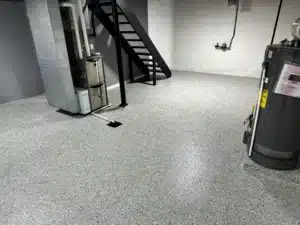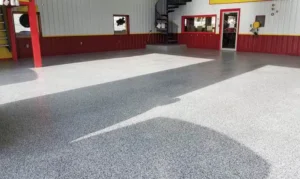
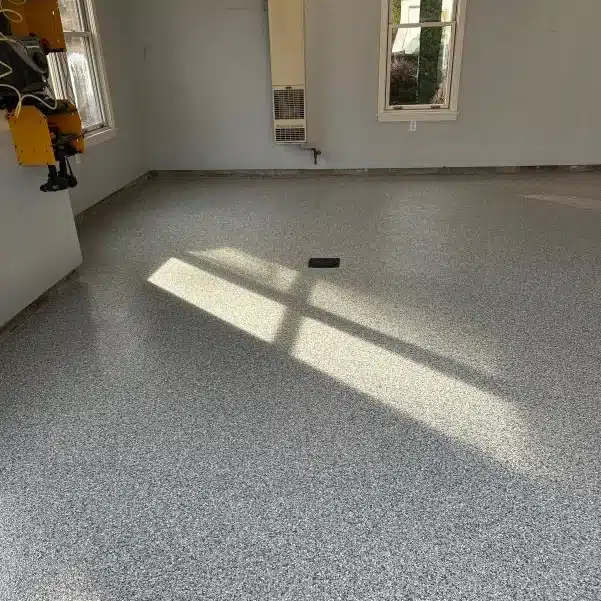
Every other coating on the market fails the same way on Western PA outdoor concrete: it yellows, peels, chips, or wears off within 2 to 7 years. Polyaspartic is the one system that does not. So are polyaspartic coatings worth it? For most Western PA patios and pool decks, the answer is yes — and the math backs it up.
Installed over a polyurea base, a polyaspartic system lasts 15 to 20+ years on patios and pool decks, holds its color under UV, flexes with the slab through freeze-thaw cycles, and shrugs off chlorine, salt, and pool chemistry. If you are tired of recoating outdoor concrete every few years, that is what makes polyaspartic worth it.
Here is how it stacks up against the alternatives:
Polyaspartic vs Other Outdoor Coatings
| Coating Type | Lifespan Outdoors | UV-Stable | Flexes with Slab | Slip-Resistant | Cost / Year of Service |
|---|---|---|---|---|---|
| Polyurea + Polyaspartic system | 15 to 20+ years | Yes | Yes | Yes (with flake) | Lowest |
| Epoxy | 5 to 7 years | No, yellows | No, rigid | Depends on additive | Medium |
| Acrylic deck paint | 3 to 5 years | Fades | Limited | Yes | High (frequent recoats) |
| Concrete sealer | 2 to 3 years | Limited | No | No | High (frequent reseals) |
| Pavers / tile | 10 to 20 years | Yes | N/A | Varies by texture | Medium (grout/shift issues) |
That table is the short answer. The longer answer below covers what polyaspartic actually means, why Western PA conditions punish the alternatives, and the cases where polyaspartic might not be the right call.
What “Polyaspartic” Actually Means
There is some confusion around the word “polyaspartic” because installers use it differently. Here is the clean version.
Polyaspartic is a fast-curing, UV-stable top coat in the polyurea family. It is almost never installed by itself. On a quality residential install, polyaspartic sits on top of a polyurea base coat that bonds to the concrete and adds flexibility. The polyaspartic top coat seals the flake or color in, handles UV exposure, and gives the finish you walk on.
When someone asks whether polyaspartic coatings are worth it, what they should actually be evaluating is a full polyurea polyaspartic system:
- Surface prep — diamond grinding, crack repair, moisture testing
- Polyurea base coat — bonds to concrete, flexes with the slab
- Decorative flake broadcast — color, texture, slip resistance
- Polyaspartic top coat — UV stability, chemical resistance, finished surface
A coating that is only polyaspartic with no polyurea base is a thinner, less durable install. A coating that is only polyurea with no polyaspartic top will lose UV stability over time. The two layers together are what makes the system last 15+ years outdoors. For the full chemistry breakdown on why polyaspartic stays color-stable where epoxy fails, see our guide on polyaspartic UV resistance.
Are Polyaspartic Coatings Worth It for Patios and Pool Decks?
A patio in Pittsburgh, Greensburg, Butler, or Cranberry Township gets hit by every Western PA weather pattern — often in the same week.
Freeze-thaw movement. From November through March, the slab cycles through dozens of freeze-thaw events. Rigid coatings like epoxy crack. The polyurea base under a polyaspartic system flexes with the concrete and stays bonded.
UV exposure. Patios get direct overhead sun for hours every day from May through September. Epoxy yellows. Acrylic paints fade. Polyaspartic stays the color you picked on install day, year 1 through year 15.
Snow melt and salt residue. Road salt blown in from driveways, snowmelt running off the house, and ice-melt products tracked onto the patio all attack concrete and most coatings. Polyaspartic is non-porous and chemical-resistant.
Wet leaves and standing water. Fall leaves trap moisture on the surface for weeks. Standing water rots paint and degrades sealers. A polyaspartic coating just gets swept off. See our full guide on how to maintain polyaspartic coatings outdoors for the complete seasonal routine.
Foot traffic and furniture. Patio chairs, grill carts, and outdoor furniture scrape and gouge softer coatings. Polyaspartic is roughly four times stronger than epoxy and handles normal patio use without issue.
Most other coating systems are designed for milder climates. Polyaspartic is the one engineered for what Western PA throws at outdoor concrete. According to Penn State Extension, freeze-thaw cycles are among the leading causes of premature concrete coating failure in Pennsylvania — a key reason flexibility in the base coat matters so much here.
Why Pool Decks Specifically Need Polyaspartic
A pool deck is a patio with five extra problems: constant water exposure, chlorine and salt water dripping off swimmers, sunscreen and pool chemicals spilled daily, bare feet that demand slip resistance, and high visibility because nobody hides a pool deck.
Polyaspartic handles all five:
- Non-porous surface — water and chlorine sit on top and rinse off
- Chemical resistance — chlorine, salt, sunscreen, and pool chemistry will not break the bond or change the color
- Slip resistance — a full flake broadcast under the polyaspartic top coat gives texture that grips when wet
- UV stability — no yellowing or fading, even with 8+ hours of overhead sun
- Strong appearance — color options, flake blends, and a finished look that ties the backyard together
Concrete sealers do not survive a pool environment for more than two summers. Acrylic deck paints chip where furniture sits. Epoxy yellows within the first season. For a real-world example of the system on a Western PA pool deck, see our Wexford pool deck case study. For more on planning around the swim season, see our guide on pool deck coating before Memorial Day.
The Cost Question: Yes It Costs More. Here’s the Math.
A polyurea polyaspartic system typically runs $6 to $12 per square foot installed for outdoor surfaces. That is more than a sealer ($1 to $3/sq ft), acrylic deck paint ($2 to $5/sq ft), or a DIY epoxy kit ($3 to $6/sq ft). But cost per year of service tells a different story for a 600 sq ft patio:
| System | Total Cost | Lifespan | Annual Cost |
|---|---|---|---|
| Polyaspartic system | $5,400 | 17 years | $318/year |
| Epoxy | $3,600 | 6 years | $600/year |
| Acrylic deck paint | $1,800 | 4 years | $450/year |
| Concrete sealer | $1,200 | 3 years | $400+/year |
That math gets worse for the alternatives once you factor in the cost of stripping a failed coating before installing the next one. A peeled, yellowed epoxy patio needs grinding to bare concrete before any new system can go down — that adds $1 to $3 per square foot to the next project. For a full breakdown on coating cost ranges, see our polyurea garage floor coating cost guide — the per-square-foot logic is the same for outdoor concrete.
When Polyaspartic Coatings Are NOT Worth It
Polyaspartic is the best system for most outdoor concrete in Western PA — but not for every situation. Be honest with your installer about your goals. A polyaspartic install may not be right if:
You are selling the house in under a year. A coating you will not enjoy is harder to justify. A pressure-wash and basic sealer might be enough to make the patio presentable.
The concrete is failing structurally. If the slab is heaved, deeply spalled, or cracked beyond a half-inch wide in multiple places, you need slab repair or replacement first. Coating over failing concrete locks in the problem.
You want a textured stone or paver look. Polyaspartic gives a smooth or flaked finish. If you want flagstone, brick, or natural stone aesthetics, pavers or a stamped overlay are better paths. See our patio coating vs stamped concrete comparison for a side-by-side breakdown.
The slab has unresolved moisture issues. Older patios with significant moisture pushing up from below need a moisture mitigation system before coating, which adds cost. If the moisture cannot be addressed, the project may not be a fit.
Your budget is locked at a sealer-level price. Polyaspartic is a higher upfront investment. If the budget is firm and short-term protection is the goal, a sealer or paint is the honest answer — even if it costs more per year.
We will tell you straight if your project is not a fit. The system is not for every patio, but for most outdoor concrete in Western PA, it is the right call.
What to Look For in a Polyaspartic Install
Not all polyaspartic installs are equal. When you compare quotes, ask about each step:
- Full system, not just one product — confirm the install includes both polyurea base and polyaspartic top coat
- Diamond grinding — acid etching is not enough for outdoor concrete; real surface prep means industrial diamond grinders
- Moisture testing — a pre-install moisture test catches problems before they become coating failures
- Flake broadcast for slip resistance — outdoor concrete needs texture; a smooth top coat is not safe when wet
- Real warranty length — a reputable installer backs the system for at least 10 years, ideally 15+; see our full 15-year concrete coating warranty breakdown for what to look for
- One-day completion — a polyurea polyaspartic install should not take a week; if the contractor needs days, ask what product they are actually using
Get a Polyaspartic Quote for Your Patio or Pool Deck
Invicta Concrete Coatings installs polyurea base and polyaspartic top coat systems on patios, pool decks, walkways, and porches across Pittsburgh, Cranberry Township, Greensburg, Bethel Park, Butler, Erie, Sewickley, Morgantown, Youngstown, and nearby areas in Western Pennsylvania, eastern Ohio, and northern West Virginia. UV-stable, slip-resistant, one-day install, 15-year warranty.
Call 724-456-2788 to schedule a no-obligation on-site quote, or request one online. We will walk your slab, check moisture, talk through color and flake options, and give you a real number for your specific patio or pool deck.