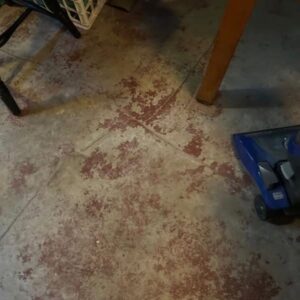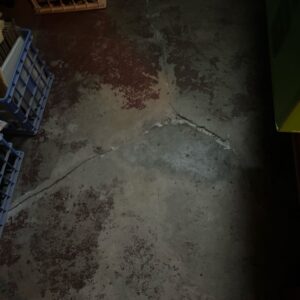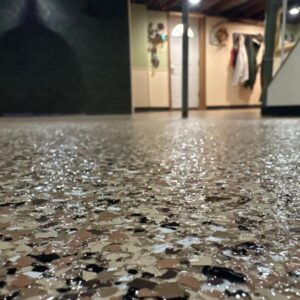
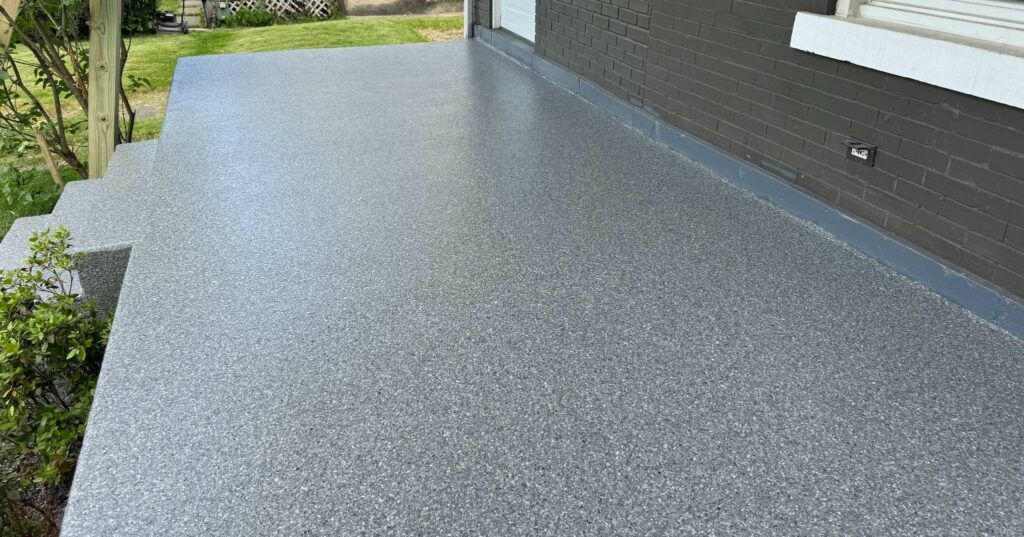
Picture a multi-bay garage in Bethel Park built around a classic car collection, sitting on a tired slab that did not do the cars justice: worn gray concrete, a few cracks, and oil shadows from decades of vintage engines. The owner wanted a floor that looked like a showroom and performed like a service bay, and there was one specific worry, hot-tire pickup, since collector cars sit parked for long stretches and a lesser coating can lift right off when a warm tire cools on it. The answer was a polyurea and polyaspartic system. After grinding and repairs, the slab became a high-gloss, hot-tire-resistant, non-yellowing floor that makes the collection the star of the room.
The challenge
A collector’s garage asks more of a floor than an ordinary one. In a space like this, the goals stack up fast: the floor had to look showroom-clean to frame the cars, resist the hot-tire pickup that comes from vehicles parked in place for weeks at a time, shrug off the oil and fluid drips that vintage engines are known for, and never yellow or dull where light from the windows and open door hits it. The old slab did none of that. It was porous enough to stain, worn enough to look dull, and exactly the kind of surface where a lesser coating would leave tire marks behind. The bar was a display-quality floor that could still take real use.
Why a polyurea and polyaspartic system was the right call
For a collector, the floor has to be beautiful and bulletproof at once, and this system hits both.
- Hot-tire pickup resistance. This is the big one for parked collector cars. A hard polyaspartic topcoat resists the hot-tire pickup that peels inferior coatings, so a car can sit for weeks and pull out without leaving a tire-shaped mark behind.
- No yellowing. The UV-stable polyaspartic topcoat holds its color and gloss instead of yellowing the way epoxy does, which keeps a display floor looking right even with sunlight pouring in.
- Chemical and stain resistance. The non-porous surface resists the oil, grease, and fluids that drip from older engines, so spills wipe up instead of staining.
- Showroom looks. A custom flake blend and a high-gloss finish give the floor a clean, reflective, gallery-like surface that makes the cars pop.
The process, step by step
A display-grade floor starts with the same disciplined prep as any lasting coating:
- Diamond grinding. The worn slab is mechanically ground to open the concrete and create the profile the coating needs to bond permanently.
- Crack and surface repair. Cracks, pits, and oil-shadowed spots are repaired and leveled so the finished floor reads smooth and seamless under gallery lighting.
- Base coat. A pigmented polyurea base goes down, sealing the concrete and providing the flexible, high-strength foundation.
- Flake broadcast. The chosen flake blend is broadcast to build the custom showroom look and add a bit of texture for grip.
- Polyaspartic topcoat. A clear, UV-stable polyaspartic topcoat locks everything in, delivering the gloss, the hot-tire resistance, and the easy-clean surface the collection deserves.
The bottom line for a collector: grind and repair the slab, then seal it with a hot-tire-resistant, non-yellowing polyaspartic finish so the floor protects the cars and looks the part.
The results
The finished floor transformed the garage into a proper showroom. The high-gloss surface reflects the lighting and makes each car stand out the way it should, and the whole space reads clean and intentional instead of utilitarian. Cars can park for weeks without leaving hot-tire marks, and the UV-stable finish keeps its color and shine instead of yellowing over time. Oil and fluid drips wipe up in seconds rather than staining, so the floor stays pristine with almost no effort. It is a surface that performs like a working garage while looking like a gallery, and the polyaspartic system behind it carries a 15-year warranty.
Why Bethel Park Collectors Choose a Local Coating Team
A collection represents a real investment, and the floor under it should protect that investment while showing it off. As a family-owned company already serving Bethel Park and the South Hills, we handle the grinding, crack repair, and coating in-house, help you choose a finish that complements the cars, and install it in about a day. The result is a floor built to look like a showroom and hold up to the way you actually use the space.
Frequently asked questions
Will the floor resist hot-tire pickup from parked cars?
Yes. The hard polyaspartic topcoat is highly resistant to hot-tire pickup, so collector cars can sit parked for long stretches without lifting or marking the coating.
Will a showroom floor yellow over time?
No. The UV-stable polyaspartic topcoat holds its color and gloss and does not yellow the way epoxy can, even with sunlight from windows or an open door.
Can the floor handle oil drips from classic cars?
Yes. The non-porous surface resists oil, grease, and fluids, so drips sit on top and wipe away instead of soaking in and staining.
Can I customize the look to match my collection?
Yes. A range of flake blends, colors, and finishes lets you dial in a showroom look that complements the cars and the space.
Give your collection a floor worthy of it
If your garage houses cars worth showing off, the floor should be part of the display and tough enough to protect it. As a family-owned team serving Bethel Park, Greater Pittsburgh, Western Pennsylvania, and nearby areas, we build showroom-grade, hot-tire-resistant garage floor coatings and help you pick the perfect finish. Call 724-456-2788 or request a quote to get started.