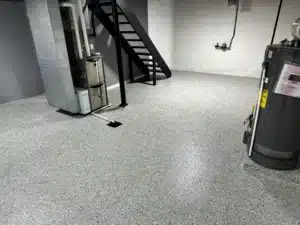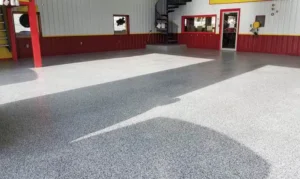
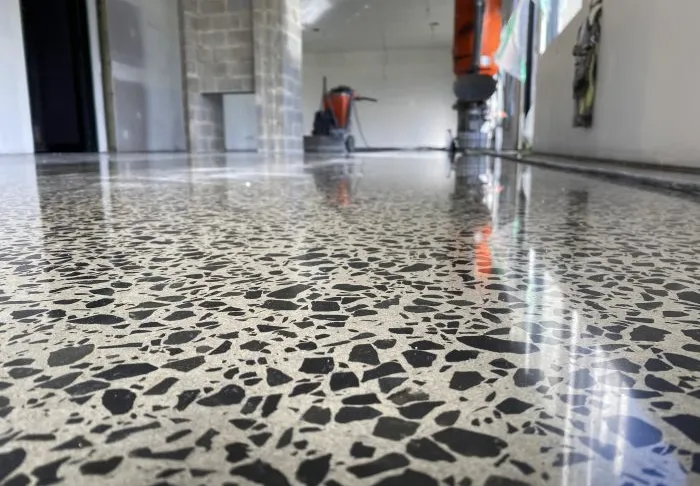
Yes, you can, as long as it is a professional polyurea and polyaspartic system rather than a DIY epoxy kit. Epoxy is the coating that struggles in the cold, since it needs a warm slab and cures slowly enough that low temperatures leave it tacky or peeling. Polyaspartic tolerates a much wider temperature range and cures fast, which is why a trained crew can install it through a Western PA winter. The real key is not the date on the calendar but the temperature and dryness of the concrete slab itself, and that is something the installer manages. Cure takes a little longer in the cold, but your garage is usually back in service the next day.
Here is what actually goes into a cold-weather install.
Why epoxy struggles in the cold
Most of the warnings about not coating in winter are really about epoxy, and they are fair warnings. Epoxy needs the concrete surface to sit around 50 to 55°F to bond and cure properly. Below that, the chemical reaction that hardens it slows to a crawl. The coating can stay tacky for days, cure soft, or fail to grip the slab, which leads to peeling down the road. That narrow temperature window is exactly why epoxy installers push spring and summer, and why a big-box epoxy kit is a gamble in cold weather.
Why polyaspartic can go down cold
Polyaspartic is a different technology. It is a fast-curing type of polyurea that cures across a much wider temperature range and sets in a fraction of the time epoxy takes. Because a professional crew can also adjust the mix and materials to suit the conditions on install day, these systems can be applied in cold weather that would ruin an epoxy job. The fast set is a bonus in winter too, since it leaves a shorter window for cold, dust, or moisture to interfere before the coating locks in.
What actually matters: slab temperature, not air temperature
Here is the part most people miss. A coating reacts to the temperature of the concrete it sits on, not the air a few feet above it. A slab holds cold long after the air warms up, so the installer measures and manages the surface temperature of the floor itself. If the slab is too cold, a crew can bring heat into the garage to raise the concrete into the right range before coating. Managing the slab, not just the thermostat, is what makes a solid cold-weather install possible.
Moisture is the real enemy
Cold is manageable. Moisture is the bigger challenge in winter. A cold slab can hold condensation on the surface or draw vapor up from below, and any water trapped at the bond line stops the coating from gripping the concrete. This is why a proper winter install includes checking the slab for moisture and keeping conditions dry before anything goes down. Controlling temperature and moisture up front is the difference between a floor that lasts and one that lifts, and it is a big reason this is professional work rather than a weekend project in January.
What to expect for cure time in the cold
Cold weather does slow the cure, even for polyaspartic, so plan for a little more patience than a summer job. In typical winter conditions you can usually walk on the floor within about a day, while returning vehicles to the garage may take somewhat longer depending on how cold it is. The crew will give you the specific timeline for your slab and the day’s temperatures. Either way, the downtime is short, and you are not looking at the multi-day wait an epoxy floor demands.
The short version: a pro polyaspartic system installs fine in the cold when the slab temperature and moisture are managed. Cure runs a bit longer, but you are usually back the next day.
Why coat in winter at all?
Beyond simply not having to wait, there are real reasons to coat during the cold months. Your garage takes its worst beating in winter, when tires drag in road salt, slush, and snowmelt that soak into bare concrete and leave chalky white stains. Coating now seals the slab against that damage instead of letting it pile up until spring. Winter is also the slower season for floor coating, so scheduling tends to be more flexible than during the spring and summer rush. Waiting for warm weather often means waiting in line, too.
Frequently asked questions
Can a garage floor really be coated in winter?
Yes, with a professional polyurea and polyaspartic system. It cures across a wide temperature range, unlike epoxy, so a trained crew can install it in cold months.
What temperature does the garage need to be?
What matters most is the slab’s surface temperature, not the air. If the concrete is too cold, the crew can warm it into range before coating, so the exact air temperature is less of a barrier than people assume.
Does cold weather affect how the floor turns out?
No. When the slab temperature and moisture are managed correctly, a cold-weather install delivers the same quality as a warm-weather one. The main difference is a slightly longer cure.
How long before I can use the garage in winter?
You can typically walk on the floor within about a day, with vehicles taking a bit longer in colder temperatures. Your installer will confirm the timeline for your conditions.
Coat your garage this winter, not next summer
There is no need to wait for spring to protect your garage floor. As a family-owned local team serving Greater Pittsburgh, Western Pennsylvania, Eastern Ohio, West Virginia, and nearby areas, we install cold-weather-capable garage floor coatings year round, managing the slab and conditions so your floor comes out right. Call 724-456-2788 or request a quote to get on the winter schedule.