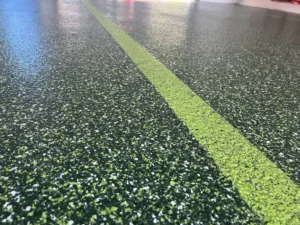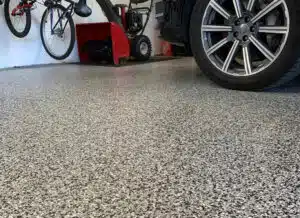
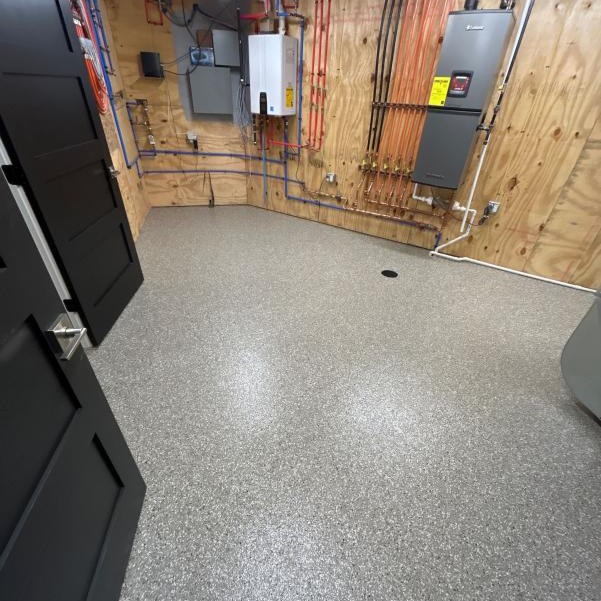
If you’re comparing basement floor coating options in 2026, the main choices come down to epoxy, polyurea, sealers, and tile systems. For homeowners in Pittsburgh, polyurea basement floor coatings continue to stand out for durability, moisture resistance, and long-term performance.
Basements in Western Pennsylvania deal with humidity, cold winters, and shifting concrete. That combination can wear down traditional coatings fast. Polyurea is designed to handle those conditions. It flexes with the concrete, resists moisture, and holds up through seasonal changes.
Most installations are completed in about a day, leaving you with a clean, finished surface that is easy to maintain and built to last.
If you want a basement floor that looks better, performs well, and does not require constant upkeep, polyurea is one of the most reliable options available today.
Basement Floor Coating Options Explained
When choosing basement flooring in Pittsburgh, it helps to understand how each option performs over time.
Epoxy Basement Floor Coatings
Epoxy has been around for a long time and is still a common choice.
What it offers:
- Smooth, glossy finish
- Lower upfront cost
- Basic stain protection
Limitations:
- Can crack or peel over time
- Longer cure times
- Struggles with moisture and temperature swings
- Wears faster in high-use spaces
Polyurea and Polyaspartic Basement Floor Coatings
This is the modern alternative to epoxy and a popular choice for homeowners who want something built to last.
What it offers:
- Strong bond to concrete
- Flexibility that helps prevent cracking
- One-day installation for many projects
- High resistance to moisture and humidity
- Slip-resistant texture options
Best for: Homeowners who want a long-term solution without constant maintenance.
Concrete Paint and Sealers
These are more temporary solutions.
What they offer:
- Quick application
- Lower initial cost
Limitations:
- Wears down quickly
- Limited protection
- Needs frequent reapplication
Interlocking Basement Floor Tiles
Modular tiles can be installed over concrete without coatings.
What they offer:
- Easy to install and replace
- No coating required
- Works for temporary setups
Limitations:
- Can trap moisture underneath
- Less seamless look
- Not a long-term protective solution
Why Polyurea Basement Floor Coatings Stand Out in 2026
Polyurea has become a go-to option because it solves common basement problems in Pittsburgh homes.
Built for Real Use
These coatings are made to handle foot traffic, storage, and everyday use without breaking down.
Handles Local Conditions
Pittsburgh, Pennsylvania basements see moisture, temperature swings, and shifting slabs. Polyurea is built to adapt without becoming brittle.
Moisture Resistance
Basements naturally collect moisture. A non-porous coating helps protect the surface and makes it easier to clean.
Faster Installation
Many floors are ready for light use within a day, so you are not waiting around for days before using your space again.
Clean Finish
The final surface looks finished and is easy to maintain with simple sweeping and mopping.
Callout:
A basement floor should do more than look good. It should hold up to real use year after year.
Epoxy vs Polyurea Basement Floors
Here is how the two compare in real-world basement conditions.
Durability
- Epoxy: More rigid and prone to cracking
- Polyurea: Flexible and handles movement better
Moisture Performance
- Epoxy: Can fail in damp environments
- Polyurea: Performs well in humid basements
Installation Time
- Epoxy: Several days
- Polyurea: Often one day
Lifespan
- Epoxy: Shorter lifespan with more maintenance
- Polyurea: Longer-lasting with less upkeep
In many Pittsburgh homes, polyurea performs better because it handles both moisture and temperature changes more effectively.
What Pittsburgh Homeowners Need From a Basement Floor Coating
Every basement is different, but there are a few common challenges in this area.
Moisture and Humidity
Coatings need to handle damp conditions without breaking down.
Cold Winters
Concrete expands and contracts. A flexible coating helps prevent cracking.
Existing Damage
Cracks and surface issues should be repaired before any coating is applied.
Multi-Use Spaces
Basements are often used as living areas, gyms, or workspaces, so durability matters more than ever.
How Basement Floor Coatings Are Installed
The process matters just as much as the product.
Step 1: Surface Preparation
- Grinding the concrete
- Removing old coatings and debris
- Preparing the surface for adhesion
Step 2: Crack Repair
- Filling cracks and imperfections
- Leveling uneven areas
Step 3: Base Coat
- Applying a bonding layer
Step 4: Decorative Layer
- Adding flake or texture if desired
Step 5: Topcoat
- Sealing the surface for protection and durability
Proper preparation is what helps a coating last, not just the material itself.
Other Basement Flooring Options to Consider
Some homeowners look at alternatives depending on their needs.
Modular Tile Flooring
Good for temporary or removable setups.
Painted Concrete
Works short-term but needs regular upkeep.
Sealed Concrete
Provides minimal protection and does not significantly improve durability.
These options can work in certain situations, but do not match the long-term performance of a professionally installed coating.
How to Choose the Right Basement Floor Coating
The right choice depends on how you use your basement.
Think About Use
- Storage
- Living space
- Workshop
Plan Long-Term
A longer-lasting solution can reduce future repairs.
Consider Moisture
If moisture is present, a higher-performance system is usually the better choice.
Focus on Maintenance
Choose a surface that is easy to clean and built to last.
Get a Basement Floor That Lasts
If you are in Pittsburgh or nearby areas and want a basement floor that holds up over time, polyurea coatings are a strong, reliable option.
Invicta Concrete Coatings installs systems designed for real conditions. Each project includes proper preparation, crack repair, and a coating built for durability. We serve Pittsburgh, Western Pennsylvania, Eastern Ohio, and nearby West Virginia.
Call 724-456-2788 to get started.